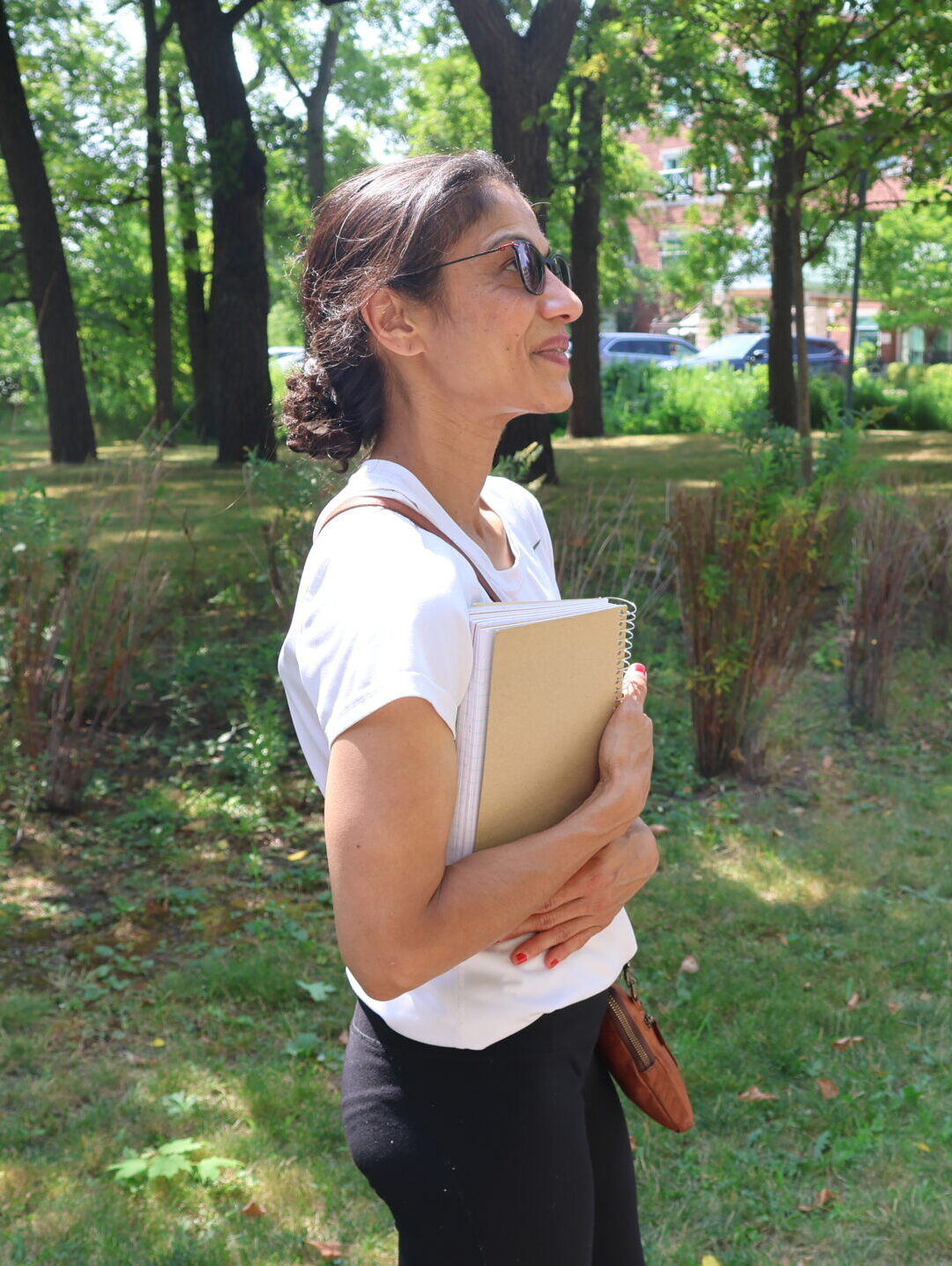
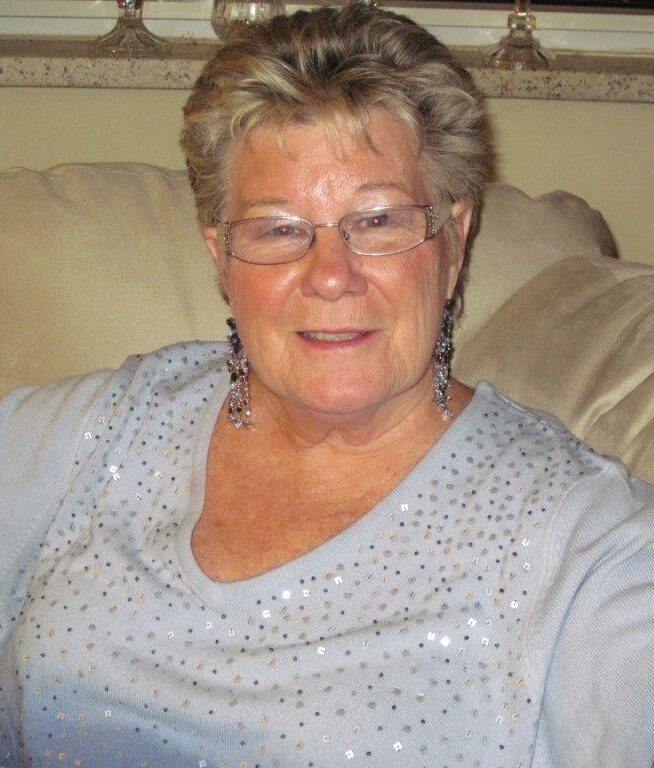
Liz McFadden

Liz was a vibrant, optimistic person who lived life on her own terms. Born in Glasgow and proudly Canadian for over 40 years, she built a beautiful life with her beloved husband Mike. She embraced her role as stepmother to Christopher and Patrick, and cherished her daughter-in-law Joanne. With deep friendships that spanned continents and decades, Liz’s life was rich with love, laughter, and community.

In October 2014, Liz was diagnosed with advanced-stage inflammatory breast cancer—a rare and aggressive form of the disease that appeared suddenly, despite her healthy lifestyle and lack of risk factors. It was a shocking and frightening moment.

“I decided to accept my fate, get back to being the optimistic person I’ve always been and fight the greatest challenge of my life,” Liz said.

She faced her diagnosis with courage and dove into treatment. After ten intense months, she was blessed with four and a half cancer-free years. During that time, Liz and Mike embraced life to the fullest. They travelled, hosted friends, laughed often, and savoured every moment, always aware that each day was a gift.

In March 2020, the cancer returned—this time as stage 4 metastatic disease in both lungs. Even then, Liz met the challenge with strength and grace. She focused on joy, found beauty in everyday moments and remained grounded with the help of her care team at Joseph Brant Hospital (JBH).

Liz often credited her JBH medical team—doctors, nurses, and support staff alike—for helping her maintain hope and positivity even on the toughest days. Their expertise, compassion, and commitment to treating her as a whole person, not just a diagnosis, gave her confidence to face each treatment cycle. She leaned on their guidance, trusted their advice implicitly, and was uplifted by the genuine warmth and empathy they showed.

“Keeping a positive attitude didn’t stop the disease from progressing,” Liz once reflected, “but it helped me find happiness, joy, and appreciation in every new day I lived.”

In true Liz fashion, she decided to give back. She created Pink Power—a vibrant, humorous, and heartfelt blog she used to share her journey. She reminded others to live boldly, love deeply, and never stop fighting.

Liz’s family is deeply grateful for the vital, and compassionate care she received at Joseph Brant Hospital and wants every patient to have access to that same level of treatment and support. In her honour, Liz’s step-daughter-in-law, Joanne, is giving back through her gourmet cookie company, SnaxCo, donating a portion of sales from pop-up events at the hospital to support its most urgent needs.

“By supporting the Joseph Brant Hospital Foundation, we honour the doctors, nurses, and programs that made a difference in Liz’s journey, and we help ensure future patients receive the same high-quality care,” says Mike, Liz’s husband. “These contributions fund cutting-edge research, patient services, and enhancements to the hospital environment – so that no one faces cancer alone. Through this support, we aim to strengthen our community’s resilience, inspire hope for new breakthroughs, and keep Liz’s spirit alive in every life the Foundation touches.”

Liz believed in living boldly, laughing often, and finding gratitude even in hardship. She often reflected on the Dr. Seuss quote, “Don’t cry because it’s over, smile because it happened.”

Her legacy is one of courage, positivity, and generosity of heart. As you remember her, raise a glass to the adventures she cherished, the friendships she nurtured across oceans, and the countless lives she brightened simply by being herself.
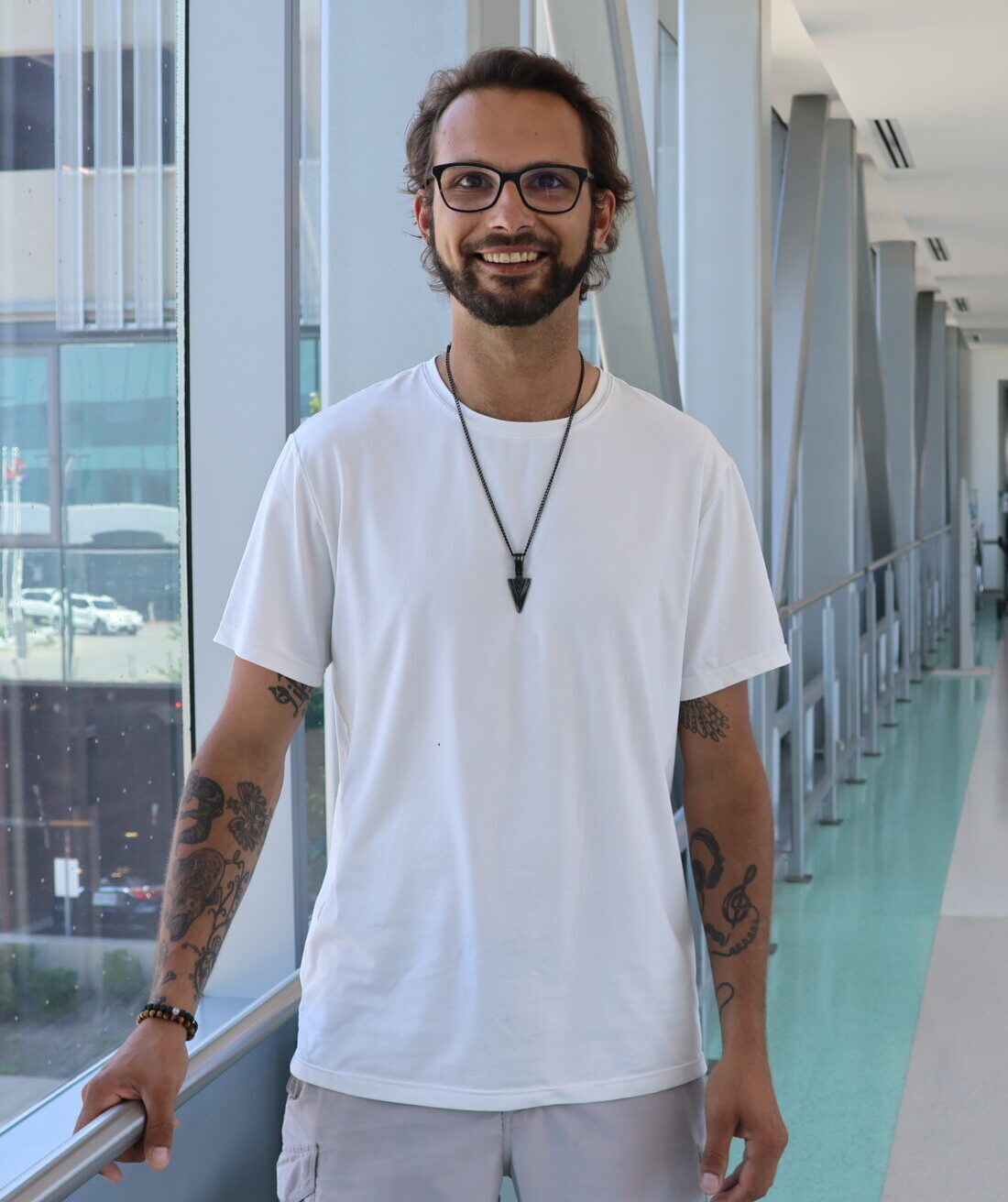
Bilo Sabra

For Bilal (Bilo) Sabra, his career as a mental health nurse begins and ends with one core fascination: people. He is constantly in awe of their ability to struggle, overcome, and endure life’s most difficult moments—and still find space for love, art, and connection.

These reflections stretch back to his childhood, when he and his family left Beirut, Lebanon, eventually landing in Detroit before settling in the Greater Toronto Area after several moves along the way. The diversity of people and how differently they responded to hardship left a lasting impression. “The vast difference in people—how they acted and reacted to their circumstances—was captivating,” Bilo shares. “I understood that I wanted to work with people, and nursing afforded me that in a very unique way.”

While studying nursing, Bilo joined the McMaster Student Outreach program, working with unhoused individuals in Hamilton to provide food and help them connect to services. That experience, along with his clinical placements, deepened his interest in mental health and helped him build meaningful connections with those facing challenges.

After graduating, Bilo began his career with The Salvation Army in Hamilton, later moving to Windsor to work with the Program for Assertive Community Treatment. He then joined Joseph Brant Hospital (JBH) as part of the Early Psychosis Intervention program. It was during this time that the PHAST (Priortizing Health through Accute Stabilization and Transition) program was being developed—a unique, community-wide initiative that focuses on early, integrated mental health care. Bilo was encouraged to apply and has since led the team with passion and purpose. “Each role has been a privilege, and each has stretched my knowledge and comfort zone in a different way,” he says.

Of course, mental health work is not without its challenges. “Sometimes the biggest need isn’t clinical—it’s material,” he explains. “People are struggling to afford basic necessities like housing, food, and clothing. We do our best to connect them with support, but the reality is, those resources often fall short. These financial stresses can either contribute to or be a result of mental health challenges—but either way, we need to start by meeting people’s basic needs.”

Despite these obstacles, the rewards are profound. “For sure seeing people get back on their feet and find a new way forward after a difficult time—that’s the coolest thing you can see in this world. I also think the relationships we build amongst each other here are a special part of the work we do.”

Looking ahead, the upcoming redevelopment of JBH’s Mental Health Unit offers renewed hope and excitement. “Having an updated space with functional areas for group therapy and skill-building will create a more supportive and rehabilitative environment,” he says. “The move to a space with natural light has already made a huge difference in our day-to-day experience. Now, gaining more room and a more inviting atmosphere will reflect the level of care we strive to provide.”

The Joseph Brant Hospital Foundation is raising funds for its For All Minds Campaign, which will support the transformation and expansion of the Mental Health and Addictions unit. An early works project to prepare the new space is set for late spring/early summer 2025. For more information and to find out how you can support our For All Minds campaign, click here.

Subhash Dighe

For Subhash, it all started the week before New Year’s.

He and his wife, Jayashree, were having company for lunch, and he was in charge of making pork curry — his specialty. The visit went without a hitch, but a few days later, he started feeling unwell. He had a severely upset stomach and was spending most of his time sleeping. Jayashree was getting increasingly worried as he drifted in and out of consciousness, barely coherent. It became clear that he needed to go to the hospital.

“Fortunately, my family insisted on taking me to Jo Brant, even though it wasn’t the closest option. I believe that decision saved my life,” says Subhash.
With his blood pressure dangerously low, he was quickly given a place to lie down. An IV to help restore his fluids soon followed. Lab work revealed that his white blood cell count was sky-high. His family stayed by his side, desperate for answers.

Finally, the diagnosis came: he had a bloodborne salmonella infection – likely from the pork he’d handled a few days earlier. And because he’s immunocompromised due to several underlying conditions, it hit him very hard. He was septic, and his kidneys had started shutting down.

“As a physiotherapist, I’ve worked in healthcare all my life. I’m now 83, and I’ve seen a lot over the years,” says Subhash. “And I can’t say enough about the exemplary care I received at Jo Brant – from the porters and housekeeping staff to the nurses and doctors, they all played a role in my recovery.”

While his family was relieved to have a diagnosis, sepsis is life-threatening. The quick action and monitoring of the doctors and nurses in the Emergency Department saved his life. But his excellent experience didn’t end there. He was then admitted as an inpatient, where his treatment continued.

After spending 10 days at Jo Brant, he was discharged.  He was then referred to the General Internal Medicine Rapid Assessment Clinic (GIMRAC), where he received follow-up care as an outpatient.

“The full spectrum of care I received throughout my experience was first-rate.  Every step of the way, and with every interaction, everyone at Jo Brant was attentive, compassionate and comforting,” recalls Subhash. “They consistently demonstrated their commitment to delivering superior patient care and ensured me and my family understood what was happening, and why.

I am so thankful to Jo Brant. The doctors, nurses and staff all went above and beyond.  I received the best possible healthcare I needed to recover.”

Bailey Telo

Bailey Telo’s mental health journey began as a student at Wilfrid Laurier University. The normally happy and outgoing young woman often spent all her time alone in her dorm room with feelings of depression and negative thoughts.

“I couldn’t get out of bed,” she remembers. “And then I came home at spring break, and it was the first time I’d felt happy in years.”

Unbeknownst to Telo and her family, it was the start of a bipolar episode, that included hallucinations and would last for weeks.

“My mom and my whole family were super concerned,” Bailey said. “No one had heard of psychosis or manic episodes.”

Her family contacted Joseph Brant Hospital, and Bailey received the help and medication she needed through the Phoenix Program.


The Phoenix Early Intervention in Psychosis Program is an outpatient, recovery-focused program that takes a team approach to helping people aged 14 to 35 years old. For Bailey, her team included a psychiatrist, a therapist, and an occupational therapist, who worked with her to provide the right combination of medication, therapy, and support to build her confidence back up. She participated in this program for three years and still has regular check-ins.

For Bailey her experience was a sign that manic psychosis is not a common subject, she saw value in sharing her story and spreading the word that it is okay to ask for help, and it’s okay to talk about your mental illness, even though it is frightening.

“The more people talk about mental illness, the less stigma will surround it,” she said. “So I wrote a book about my journey – starting from the feelings of depression right through the manic episodes.”

Her book, Well, That Was Strange, even contains her journal entries from her psychotic episodes, as it was happening, and the feedback she has received has been overwhelming.

“I wasn’t expecting it to be as popular as it is. The day I published it I posted on Instagram and there were so many comments and feedback,” she said. “A lot of people have read it, and I’ve been asked if I was nervous to share what I went through…I always respond with no, the whole point is to help somebody else.”

You can find Well, That Was Strange: A True Story About a Young Adult Who Learned to Live With Manic Psychosis on Amazon.ca.

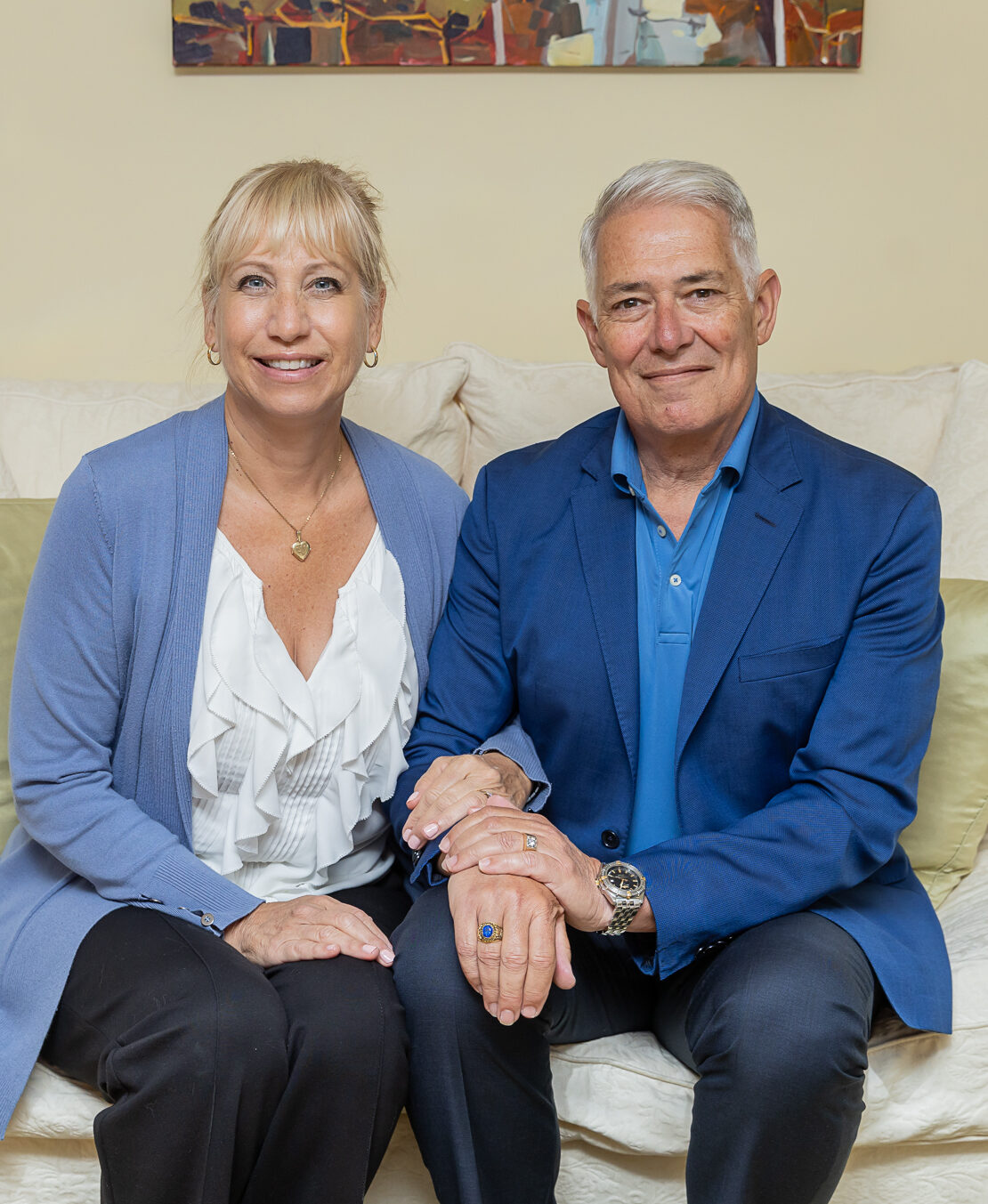
Rajni and Surekha Paun

For Rajni Paun, donating to the Joseph Brant Hospital Foundation was a way to honour three very important people in his life while supporting healthcare close to home.

“This donation is made in memory of my late wife Aruna, and my parents Jagjivan and Kantaben,” said Raj. “My wife, Surekha (Sulu) and I want to keep their memories alive and also help people as they had done in their life.”

After receiving her education in Uganda, India, and Canada, Aruna qualified for an MSc. in Home Science and later went to the University of Manitoba to qualify as a Family Studies teacher. She wrote a vegetarian cookbook which became very popular and was reprinted twice in Canada.

“Aruna was diagnosed with Progressive Supranuclear Palsy (PSP), a rare neurological disorder, and she passed away after a very lengthy sickness in 2009,” said Raj.

Raj’s father, Jagjivan was born in India to a poor family, with three brothers and two sisters. Despite enormous financial difficulties, he studied humanity and law at Bombay University and qualified as a BA LLB. He moved to Uganda in 1939, choosing not to practice law but working as a large industrial firm manager.

“He was a strong believer in education and uplifting living standards of friends and family since he had gone through difficult times in educating himself,” said Raj. “He understood the importance of educating the younger generation and worked hard to uplift the lives of the people he came across.”

Through hard work, he managed to bring four uncles, two cousins and one aunt to Uganda and settle them. His cousins went on to become a Pharmacist in the United Kingdom, while the other was a gynaecologist in the United States.

“He was a very kind and giving soul and was a trustee of the Post Secondary Education Trust fund,” said Raj. “He particularly helped and played a major role in helping hundreds of students to go to universities and colleges, and many of these students are doctors, engineers, pharmacists etc.”

Raj’s mother, Kantaben, grew up as an orphan and lived in a girl’s boarding school in India. During her life, she was very active in the charitable women’s society in our hometown in Uganda, always willing to help those who needed help.

“She was a kind soul who was always taking care of the family while giving back,” said Raj. “She was warm-hearted and always looking out for others.”

Raj remembers when his mother had a stroke in India, and he had to take her to the hospital with his brother in the back of a truck as there was no ambulance service.

For Raj and Sulu, this memory is a driving force in their decision to support healthcare and their gift to support Joseph Brant Hospital was a meaningful way to honour these incredible individuals and make a difference in the lives of others in their community

Laurie McLachlan

Laurie McLachlan says she has been “doing a dance with her mental health” since she was 16 years old.

“It’s been a very long journey, with ups and downs,” she says. “I’ve been trying to find to live a life without anguish through medication, therapy.”

Almost 50 years later, she has found balance and the support she felt she was looking for in the Community Mental Health program at Joseph Brant Hospital.

“I have hope, and belief that it is possible to find equilibrium,” she says. “The programs I attended have given me the tools to get me through difficult thoughts.”

Dialectical Behaviour Therapy (DBT) was a game changer for Laurie. She feels the programs and support at JBH are invaluable to service recipients like her and shares that support is available if you look for it.

“Living with good mental health is possible, and it’s important to talk about it,” she says. “My ongoing weekly group sessions keep me connected to like-minded people, and we share our wins and losses.”

Laurie knows many people want and need help, and that is where the incredible and innovative programs available right here in our community come into play.

“The community needs to know that they do have support at Joseph Brant Hospital,” she says.

Alison

For Alison, it all started with counting.

“Since the age of eight, relentless, unexplainable counting was the base for my day,” she says. “I was checking door knobs three times, checking that the stove was turned off three times.”

Alison felt like doing things in a very particular way was the key to safety, and if she didn’t do them, something terrible would happen.

As a teenager, the thoughts started to play an even greater role in her life.

“Horrible visions of hurting myself or hurting others started to flood my mind,” she says. “No matter how hard I tried to push them down and do my compulsions, they just kept coming back.”

Despite being full of confusion, panic and fear, she just kept smiling. Not wanting to be judged or labeled, Alison decided she had to keep it to herself, so the stigma didn’t define her. She thought as time passed, somehow she could just “fix” herself.

“It wasn’t until I woke up under the bright lights of the Emergency Department at Joseph Brant Hospital did I truly let go of what I had been holding back and fighting for years,” she says. “Following an extensive mental breakdown shortly after New Year’s in 2023, I started what would be a 12 day admission to the in-patient psychiatric unit.”

For Alison, it was terrifying to leave her husband and children, afraid of what would come next. She was afraid that the terrible thing she had been trying to keep away had finally broken in.

What she learned in her time as an inpatient not only surprised her, but also what she had assumed would be the thing that broke her, turned out to be the very thing that saved her life.

“I was properly diagnosed with Obsessive Compulsive Disorder (OCD) and Generalized Anxiety Disorder (GAD). I was given the guidance I needed on medication and therapy. I received the help and support that I needed, guided by those who showed me nothing but kindness and understanding,” she says. “The help I received in those 12 days gave me hope and openly handed me back my life in a way that I don’t think I’ll ever truly be able to express.”

For Alison, stigma and shame drove her to the place she didn’t know she needed to go, and helped her find understanding and compassion.

“I realized I was never broken to begin with, I just needed help,” she says. “And other people need to be able to see this too.”

For Alison, sharing her experience is an opportunity to inspire others, encourage open communication, and give a voice to those who are smiling in silence as a way of coping.

“An open ear and an open heart can go further than you ever imagined,” she says.


Olivia

From a very young age, people always commented on Olivia’s sunny disposition and positive attitude. She was the child who had a permanent smile, was quick to laugh, and was full of joy and fun. But everything quickly changed. 

“I was having a hard time focusing in school and keeping up with the rest of my class,” Olivia said. “School became very hard, and social relationships were challenging.”

At age 7, she was diagnosed with ADHD and later a severe learning disability. Despite these challenges, Olivia worked hard in school to overcome her barriers. 

In grade 10, she finally made some friends and had her first boyfriend. Unfortunately, this turned into an abusive relationship which led to a major depressive episode, Post-Traumatic Stress Disorder (PTSD), and ultimately her first hospitalization. 

“It was difficult to be away from my family in a hospital environment by myself,” said Olivia. 

Wanting a fresh start for her final year in high school, she transferred to a small private school. The small classes and commitment of the teachers to her learning style allowed her to thrive. 

A month prior to graduation, everything changed again. Olivia’s teacher reported that she was displaying a change of behaviour in the classroom. 

“I was unfocused, energized, running up and down the stairs, standing on desks, easily distracted, talkative, and my medications were no longer working,” she said. “My psychiatrist started the process to reassess my original diagnosis.” 

The day before her 18th birthday, she was diagnosed with bipolar disorder. While the news was difficult to receive, Olivia and her family were grateful to have such rapid access to the psychiatrist. Because of this, they were able to avoid hospitalization and medication changes were quickly made which helped to stabilize her symptoms. 

Despite all of this, Olivia graduated with highest marks in her class, won an award for most volunteer hours and was nominated for a community award for her outreach efforts. While she was accepted into all her university choices, Olivia had unfortunately lost her confidence. 

“My brief manic episode made my anxious of becoming unstable while at university,” she said. “I was fearful of being away from the support of my family and psychiatrist who could help recognize the symptoms and provide me with the tools I need to promote stability.”

Ultimately, she settled on attending a small university close to home. Unfortunately, the stress was too much and she destabilized during second semester and had to withdraw. Her mood became extremely low and a hospitalization was needed to restabilize. She attempted university two more times, but couldn’t complete a year as she would become very depressed and lose all focus and motivation. It was disheartening since so much hard work and effort had been made to get Olivia to university. 

“I had always dreamed of becoming a teacher, but realized that this was not going to be possible if I couldn’t even complete one year of university,” she said. “I knew deep down that I wanted to work in some type of helping profession.”

Olivia heard about Bethany Residence, which is a supportive housing facility for adults with severe and persistent mental illness, and has been working there for nearly three years. Olivia recently completed a Peer Support Course and draws on this for her work. She provides personal support and care to the residents and teaches her residents healthy coping strategies and encourages them to use these strategies when they feel dysregulated. 

“I will often share my own experience with mental health, which connects me to the residents,” she said. “It helps them to know that I understands what this struggle can feel like and gives them hope that through proper treatment, medication and management, stability is possible.”

Olivia is still connected to a psychiatrist through Community Mental Health at Joseph Brant Hospital. Through consistent monitoring, her symptoms are quite well managed. She works full time and recently moved out on her own which has given her the hope that a “normal” life is possible. 

“I know that I need to manage my illness and be aware of the signs and symptoms. Early detection of symptoms and intervention is my best defense and I am grateful for the support of the clinic at JBH,” she said. “It is reassuring to know that I am being monitored closely and that there is support available if I begin to become unstable.”

While Olivia’s life is different from how she envisioned it, she has made the best of this difficult situation and challenging diagnosis. She has not let it dampen her spirit and is not defined by her diagnosis. She is working hard to build her life and to find meaning in her experience. 

“I want others to know that with the right treatment and the right attitude that recovery is possible,” she said.

Olivia will be helping with this year’s Walk to the Lighthouse. 

“Last year a few of the residents from Bethany joined the walk for the first time,” she said. “This year, it is our hope to have many more residents, families and staff walk in support of Mental Health and Addiction Services at JBH.”

You can learn more about the Walk to the Lighthouse at https://walktothelighthouse2024.funraise.org/. 

Marianeve Maffia

For Marianeve Maffia, volunteering as a Director on the Joseph Brant Hospital Foundation Board came from a place of gratitude and appreciation for care her grandmother received.

At 85 years old, her grandmother, who only spoke Italian, began to suffer from frequent and severe nosebleeds.

“Over a few months, she had to be admitted at JBH several times to help control the nose bleeds and was successful on several occasions with same-day discharge,” Maria said. “The last time it happened she became very weak, disorientated, and afraid.”

The team at JBH was able to cauterize a vein in her nose, alleviating the issue and her grandmother regained her strength quickly.

“When we picked her up from the hospital, she was grinning ear to ear as she was so pleased a solution was found,” Maria said. “She went on to explain to us how much she really appreciated the kind and compassionate care of the staff, and she could tell from the staff’s eyes their help and concern for her wellbeing was genuine and compassionate which gave her great comfort.”

For Maria, her grandmother’s experience showed how important it is to have access to high quality care close to home and in the community.

“Being a resident of Burlington for over 10 years prior to being on the Foundation Board, I knew very little about JBH and felt foolish I didn’t know much,” she said. “It wasn’t until I had my grandmother frequented JBH did I have any experience at the hospital.”

Maria couldn’t stop thinking about the many generations within her own family where JBH would be the community hospital of choice in a time of need. She had a desire to learn more about our community hospital, have an opportunity to give back and support an organization that directly supports the fundraising initiatives of the hospital.

When a friend of Maria’s who was on the Foundation Board let her know they were looking for new members, specifically with an accounting background, she immediately put her name forward.

“I shared with her my grandmother’s experience and I would love to find a way to give back and express my gratitude to how she was cared for by JBH,” Maria said. “And six years later, my term is sadly coming to an end.”

During her term, Maria valued the opportunity to get to know the staff of the Foundation and Hospital.
They are dedicated and passionate individuals working in great collaboration as a team and with the Hospital to support fundraising for key priorities,” she said. “Being a Director offered a wonderful opportunity to learn firsthand from the Hospital Senior Leadership Team who are a group of passionate, responsive and strategic individuals truly committed to delivering excellence and the best healthcare for our community. “

In addition to her board work, Maria had to juggle a number of other responsibilities.

“My time on the Board would not have been possible without the understanding and support of my “village” – my employer RSR Global, my husband Pietro, and my close family friends who were flexible with their schedules to assist me in attending the committee meetings and Foundation events,” she said. “I truly love and appreciate each and every one of you!”

The Joseph Brant Hospital Foundation would like to thank Maria, and all the volunteers who give their time generously in support of our hospital for making a difference for healthcare close to home.

Barbara Seldon Leggatt

Barbara Seldon Leggatt’s time at Joseph Brant Hospital started in 1976, when she did an internship during her Masters of Social Work, and came full circle with a role on the JBH Foundation board. As she comes to the end of her six-year term, she looks back on her time at JBH and JBHF with great pride.

“I think we have a really great community hospital, and I feel proud to be a part of because I think this hospital has grown and developed into something that’s state-of-the-art,” she said.

In 2018, Barbara was considering retirement and was looking for something meaningful. Acquaintances who were on the Foundation Board at the time put her name forward. For Barbara, it fit her desire to give back and apply some of her professional knowledge and experience.

“I think that having a really good hospital in our community is important and this was a way to help in that cause,” she said. “It’s been an exciting time with the redevelopment and the progress that has continued since then.”

For Barbara, the importance of volunteering started at an early age.

“My father and older brother were both involved with boards and foundations, and my mother was a 30 year volunteer at McMaster Medical Centre,” she said. “I started volunteering when I was 15 and have always done volunteer work of some kind. It’s just part of the value system I grew up with and I believe that involvement in one’s community is important.”

But it is a juggling act. Barbara retired soon after joining the board, but had to juggle her active lifestyle and her responsibilities as Nana with her commitment, but she felt the Foundation was a good fit with her schedule.

“This has been the most efficient and effective board I’ve been associated with,” she said.

The Joseph Brant Hospital Foundation would like to thank Barbara, and all the volunteers who give their time generously in support of our hospital for making a difference for healthcare close to home.