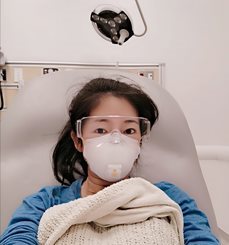
Deb Swire

Deb Swire has a long relationship with Joseph Brant Hospital, back to her days volunteering at the JBH coffee shop.

“That was before Tim Horton’s,” she laughed. “So that tells you how long ago it was!”

Unfortunately, it was surgery that brought Deb to the hospital most recently but her experience was a good one.

“I feel like sometimes we’re quick to criticize and never quick enough to thank, so I wanted to send a note,” Deb said.

The little things made her experience a positive one. She says from the moment she arrived she felt welcomed and treated very well by everyone she encountered including a maintenance staff member who provided some directions with a smile.

“Someone turned my bed, so I could look out the window and look at the lake and the activities, and I thought what a nice touch,” Deb said. “It really helps in the long run with the healing process when you feel good mentally and feel you had great care.”

For Deb, JBH has always been there. From having both her children there to recently receiving her COVID-19 vaccination, the hospital has always been an important part of the Burlington community.

“I’m trying to tell everyone give it a chance, it’s wonderful,” she said. “It’s a great hospital and a wonderful place and I’ll keep supporting it.”

Sasha Menezes

For Sasha Menezes, the Mental Health & Addictions program at Joseph Brant Hospital has been a life-saver.

After she received a diagnosis of bipolar disorder at 18, Sasha struggled with taking her medication, especially when she was younger. But thanks to the care of the team at JBH, especially the inpatient unit, Sasha has a better hold on her illness.

“I’ve had this illness for more than 30 years. I’ve got a hold on it now, but you don’t always,” she said. “The team at JBH have been wonderful to me – they actually saved my life.”

For Sasha, artistic expression has always been an outlet and a form of self-care. One of her paintings depicts a shark in a living room, which she says is her representation of mania.

While she’s received incredible care during her time at JBH, Sasha strongly believes that the Mental Health & Addictions programs needs to be expanded. She is the co-founder of Artrageous, a fundraiser in partnership with the Art Gallery of Burlington, dedicated to raising much-needed funds.

“Being a part of Artrageous has been amazing, and has been part of my recovery,” she says. “I think the whole community of Burlington should get behind mental health.”

For Sasha, sharing her story is about eliminating the stigma of mental illness, and inviting those that need support to ask for it.

“It’s important to get help and have access to help. Joseph Brant Hospital being there for me saved me life.”

In recognition of her birthday on May 20, Sasha is raising funds in support of the Mental Health & Addictions program at JBH. To donate in her honour, please visit Sasha’s personal fundraising page for the Equilibrium Burlington Walk to the Lighthouse.

Danielle Murphy

Joseph Brant Hospital is a special place for the Murphy family, with Danielle having received excellent care during her pregnancies, and they want to give back to the hospital and the Maternal Child Unit.

This year the Murphy family’s home at 5031 Spruce Avenue in Burlington will be decorated front and back with over 150 inflatables for Christmas.

“Every year people try to give us money for the joy it brings their families to visit and walk the grounds, so this year we will be accepting donations for the hospital,” says Danielle.

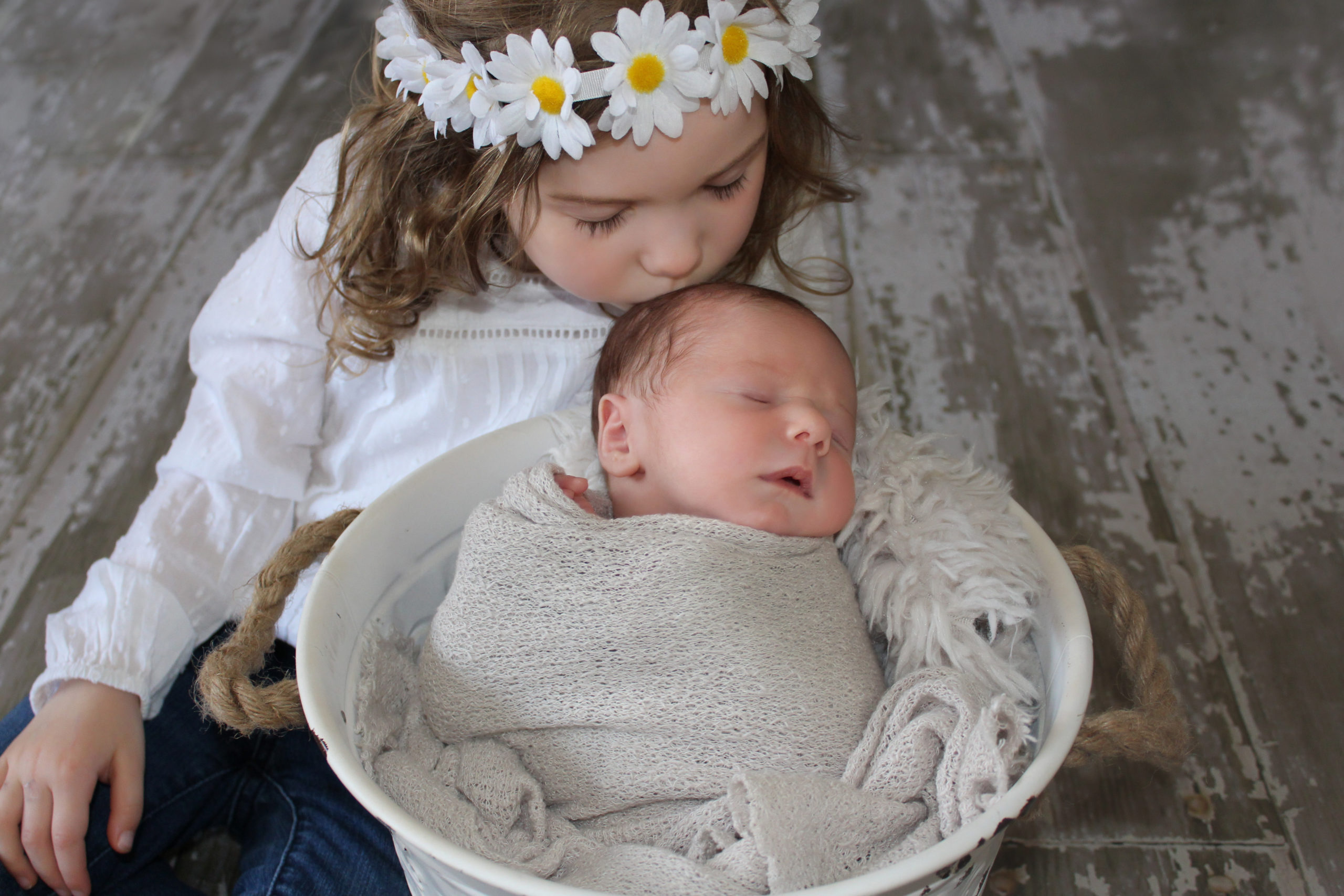
Both her daughter and son were born at Joseph Brant Hospital, most recently her son Hudson was born in March 2020 at the beginning of the COVID-19 pandemic.

“The best thing about Joseph Brant Hospital is how all the nurses and doctors go above and beyond their job to make sure you are cared for,” says Danielle.  Danielle was looked after by Dr. Stella Psarakis and Dr. Paul Wu for her fibroid surgery.  With Dr. Wu aiding Danielle with her fertility and pregnancy related concerns.

Danielle came to the Emergency Room with high blood pressure. The ER physician brought in Dr. Wu, who told Danielle that she was going to her baby that day. Immediately, Danielle was admitted and underwent an emergency caesarean.

“Hudson had to stay in the Neonatal Intensive Care Unit (NICU) for two weeks. The physicians explained to me how the medical machines were helping Hudson and they introduced me to the nurses on shift and walked me through everything,” says Danielle, “They listened to what I had to say, and valued my input.”

Craig Brown

Craig Brown found himself in and out of the hospital from October until January. “I thought I was having a heart attack because I was so twisted up with my anxiety, and I thought maybe my medication wasn’t working,” says Craig. “When you see yourself as your enemy, it is the worst feeling in the world, and I wouldn’t wish that on anyone.”

During a follow up appointment in January, Craig was admitted to the inpatient Mental Health Unit for a week.  Here, he would be monitored and receive proper treatment.

During that admission and through his treatment, Dr. Viljoen diagnosed Craig with Obsessive Compulsive Disorder.  “For 30 years, I’ve battled with anxiety and OCD.  To be finally diagnosed with OCD, it gave me relief.  It was like the puzzle was put together, and it made sense why I felt the way I did,” says Craig. “I’ve acted a certain way my whole life, and my anxiety stemmed from not knowing why I felt the way I did.”

Through therapy, he found himself able to manage his mental health properly. “I worked with my therapist, Neena Malhotra, for many months, and she had a tremendous impact on my life.  She taught me techniques to manage and even eliminate some of my symptoms,” explains Craig. “Both Dr. Viljoen and Neena have had a significant and positive impact on my life.”

Craig considers himself to be fortunate to be looked after by his team at Joseph Brant Hospital.  He remarks on the support he received from the hospital as well as from his employer, co-workers, family, his children, step-children, and wife.  “When I sit and reflect over the past year, I am very appreciative.  My goals are back, my life is back, and my dreams are back,” says Craig, “If you’re struggling with your mental health, know that there are people who want to help you.  Tell your doctor, a loved one, or someone you trust.”

Susan Gilbert

When Susan Gilbert’s father broke his leg and was dealing with spinal stenosis, he was admitted to Joseph Brant Hospital. Medically, he was doing well in his recovery and Susan and her family were preparing to relocate their father into a retirement home. But what Susan and her family didn’t anticipate was the COVID-19 pandemic to hinder their transition plan.

“It has been an unusual and difficult transition considering the circumstances, but we are so grateful to the staff at Joseph Brant Hospital,” says Susan.

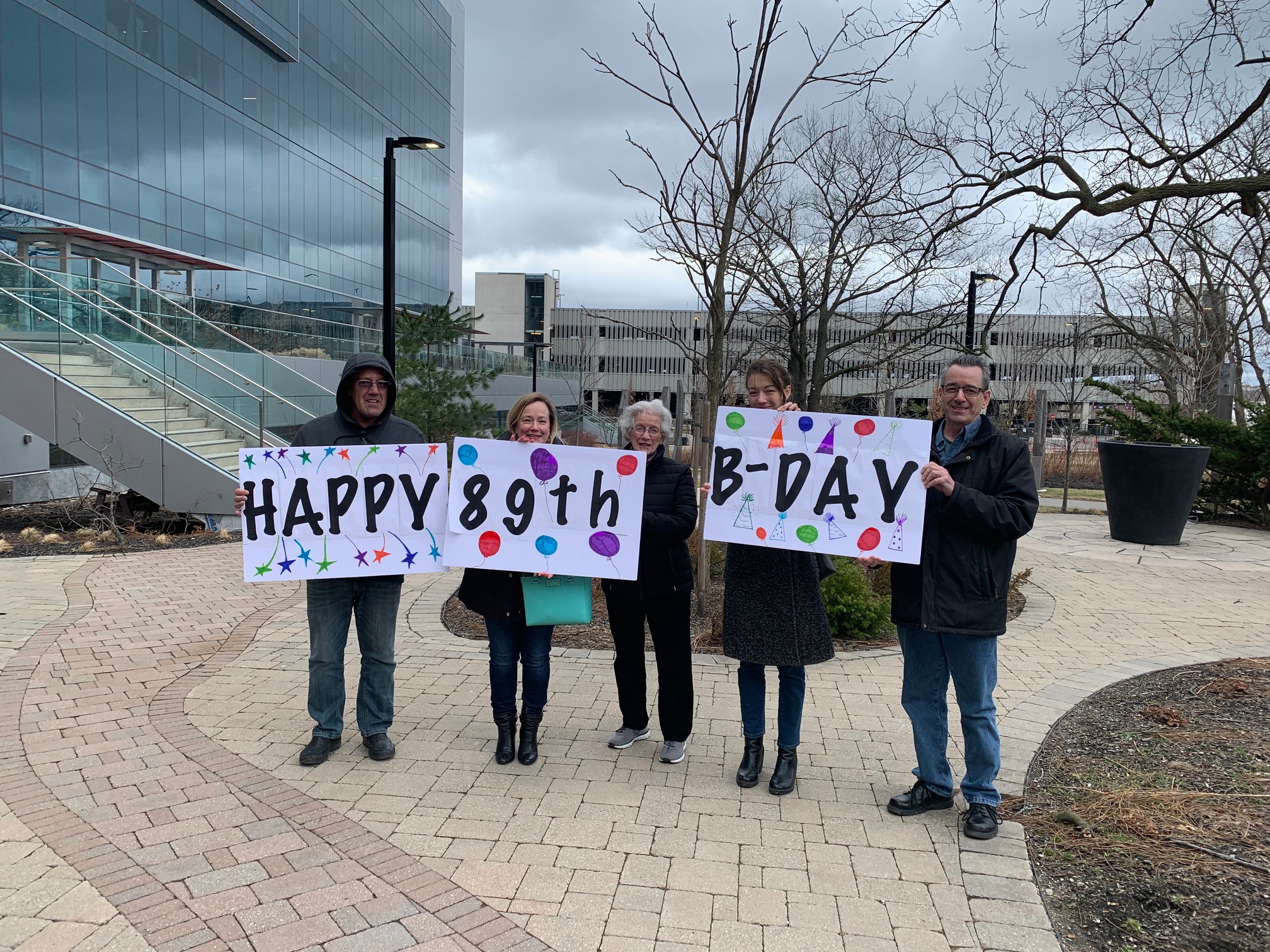
With the new hospital policy limiting visitors, Susan realized the family would not be able to celebrate her father’s 89th birthday together.

But that didn’t stop Susan and her family. They created signs for him, and worked with the nursing staff to find the best place where they could be outside so her father could see them from his room.

“The nursing staff helped us to co-ordinate getting my father over to a window, where a few family members gathered in the courtyard below with a celebratory sign,” recalls Susan. “These wonderful, caring nurses went above and beyond to capture the event in photos and shared them with the family.”

For Susan, it was about celebrating her father’s birthday despite the difficult circumstances. “The staff at the hospital got together to make my father’s birthday special when we couldn’t be there. I hope that the staff feel the gratitude and support from my family, the community and the entire country. A heartfelt thank you – for everything they do,” says Susan.

Luis Vargas

When Luis Vargas came down with a cold in late November, he had no idea how serious his condition was going to become.

“I was working hard at my job and was always on the go. I started to feel sick,” he says. “I was coming down with a cold, and I thought that this was normal from working so hard, but then the cold turned into the flu.”

In early December, Luis visited his family doctor, who diagnosed him with pneumonia and prescribed him antibiotics. “My doctor told me to see him in a week for a follow-up.  But despite taking antibiotics, each day, I was getting worse.  My sense of taste was all over the place, I was hallucinating, out of breath, I had a fever and was sweating.  It was a nightmare,” recalls Luis, “I felt like I was dying.”

On the advice of his family doctor, Luis came to the Emergency Department and he was immediately admitted to the ICU. After a series of tests, Luis was diagnosed with Acute Respiratory Distress Syndrome and Influenza A, and was placed on a ventilator with a breathing tube the next day.  For the next 12 days, Luis was in an induced coma.

“The next thing I remember was waking up in the ICU to a conversation between the nurses and Dr. Prodger,” says Luis.

A short time later his breathing tube was removed and he spent Christmas at the hospital recovering. “I fell in love with the staff at Joseph Brant Hospital.  The level of passion and care was incredibly genuine.”

Luis comments how he remembers seeing the hospital’s CARE values in his room.  “I remember seeing the words compassion, accountability, respect and excellence, and I received all of that. I’m thankful for Dr. Prodger and the entire critical care team.  They all changed my life because of their care and love.”

Reflecting on his life-changing experience, Luis expresses the immense gratitude he has for his entire healthcare team at Joseph Brant Hospital. “When something like this happens to you, you think about how silly the rhythm of life can be.  We need to find a balance, breathe and enjoy life,” says Luis.

Grace Cheung

As Grace Cheung sat in her living room, nauseous and lightheaded, she felt helpless and called her friend to help her. With a family history of cerebral hemorrhages, she was nervous.

Grace had been self-isolating and had been unable to continue her regular routine of running up to 12KM, 5 days a week.

She decided to do some an aerobic workout, while she transitioned back to her normal running routine, but felt lightheaded when she completed her exercise.  Thinking it was just the new exercise, she sat down and the dizziness and nausea started. Eventually, she couldn’t stand or control her body at all. That’s when she called her friend, Michael.

“Michael, help. I’m dying.”

Both called 911, although Grace was unable to hear or understand the operator.

When the ambulance arrived, the paramedics administered a drug to ease her nausea, and transported her to Joseph Brant Hospital for assessment.

Despite the situation with COVID-19, Grace was immediately struck with how organized the Emergency Department was. She had been discussing the lack of PPE in some Hospitals with friends a few days before, but was struck by the calm demeanour and professional service she received from the staff.

But the care and attention she received in the Emergency Department reassured her that our system is working and that she was in good hands at JBH.

Our system is still working she thought, as they conducted a number of tests to determine the issue. Grace was referred to a specialist for follow-up and discharged the same day.

George Stroe

When George Stroe first visited the Emergency Department at Joseph Brant Hospital in late March, he had no idea the journey he was about to go on.

George had been experiencing symptoms consistent with COVID-19 including a fever, worsening cough and difficulty breathing. Following the proper protocols, he was isolated, tested and admitted to the hospital for further care.

Within the first day, his condition worsened to the point where he required admission to the ICU, and the following day had a breathing tube inserted and was placed on a ventilator.

“The reality is that I deteriorated very fast, in a matter of hours,” he says. “I would have died for sure if it wasn’t for the hospital with doctors around me who did all they could to save me.”

When he woke up, he was unsure of where he was and George says he remembered his birthday, and that he was admitted in March but he “had no idea was it April, was it May, was it June?”

And two weeks ago, George, who was the first COVID-19 positive patient in the Hospital, the first to be admitted to the ICU, the first to be placed on a ventilator was the first to be discharged from the ICU.

Just over a week later, George was discharged from the hospital and still has no memory of his time in the ICU other than having high praise for the staff.

“Everyone took very good care of me,” he said.

After spending a month in hospital, George is relearning how to do certain things. While he can do most things unaided, he is relearning to write and to type.

“When I looked at my signature on my discharge papers I noticed how poor my handwriting looked,” said George. “But first and foremost, I’m happy to be alive. It’s a hell of a disease and I’m forever grateful.”

Christina and Ann

For sisters Christina Koli and Ann Legere, family and art are two of life’s treasures, and with their fashion accessory company Art Of Accessory (AOA), they have been able to combine the two.

“Starting an art-based business together is something we have always wanted to do, and the pandemic gave us the opportunity to do it,” said Ann.

Christina lives in Burlington with her husband, son and their golden retriever. When the pandemic began last year, she found herself off work and homeschooling her son.

It was her love for painting and her need for creating that led to the development of small ‘tiny gems’ paintings, which were more manageable to fit into her busy days. She painted flowers inspired by her daily walks and then heart paintings while thinking of all the frontline workers.

“I wanted to donate a painting to be printed and given as thank you cards to all the essential workers at JBH,” Christina says.

‘Magical Heart’ was the first of a series of paintings. ‘Courageous Heart’ and ‘Covid Blues’ paintings were later used on cards for the hospital.

Later in the year, Christina and Ann, who lives in Toronto with her husband, daughter and two sons, (when they are not away at school), launched Art of Accessory.

“It’s all very exciting and new, with so much to learn.” says Ann. “Christina and I have a very close relationship, and AOA gives us a chance to connect several times a day, which has been especially nice through this pandemic.”

The ‘Courageous Heart’ painting, inspired by the dedication of the frontline workers during COVID-19, was used in the design of silk scarves that were available for purchase, with proceeds going to support the hospital’s COVID-19 response. For the sisters, it was a small token of appreciation to the frontline staff.

“Our fundraiser grew out of the relationship developed from reaching out with the idea for the ‘thank you’ cards, and we thank JBH for allowing us to be actively involved with the hospital during these difficult times,” says Christina.

You can see their full line of accessories available at https://www.artofaccessory.com/.

Rose Ryan

“When I was 28, something happened to me that not only scared me but changed my life,” says Rose Ryan.  “I was diagnosed with cancer.”

Rose was experiencing some symptoms and had gone to Joseph Brant Hospital where she was referred to Dr. Gee. They ran some tests and the results showed that Rose had a tumor in her thymus.  Shortly after, Rose underwent more tests and surgery was scheduled.

“The staff at the hospital were incredible, efficient and mapped out the next steps in my treatment,” says Rose.
Soon after her diagnosis, she received her first chemotherapy treatment as an inpatient, which she continued to receive as an outpatient every three weeks for six months.

“I remember those hospital visits vividly.  I cannot say enough about the staff at the hospital, and I will never forget the people who changed my life.  I still remember every nurse, social worker, hospital staff, and doctor who helped me during this difficult time,” says Rose.

Rose discusses how the staff went above and beyond to ensure that she was cared for and every Hospital visit made her feel like she was at home.  “Not only did I receive such exceptional care, but I also witnessed the staff interact with other patients and saw how they truly cared for all of us,” says Rose.

Today, Rose cherishes every moment with her family.  “As I watch my children grow and think about their endless possibilities, I thank Joseph Brant Hospital for giving me care and the courage to persevere,” says Rose.

After receiving her diagnosis, Rose started about thinking about her husband and the importance of having her affairs in order.  “I wanted to make sure our family was supported.  I thought about what my children may face in their future, and I wanted to ensure that I could help them,” says Rose.

Not only did Rose think about her immediate family, but she also thought about the families in her community.

“At one point or another, we will all know someone who needs to use the services of the hospital.  And that was why I decided to give my support to a hospital that took care of me during a trying time through a gift in my will,” says Rose.

Legacy gifts ensure that Joseph Brant Hospital continues to be there for the community in the moments that matter by providing quality care.  Rose explains, “Legacy gifts make a profound impact on the future of our healthcare.  The future of Joseph Brant Hospital is filled with so many possibilities, and I believe it’s important that we support one another so our community can continue to thrive.”

For Rose, her legacy will be that she was able to give a gift to Joseph Brant Hospital that will allow them to continue to provide exceptional care in a well-equipped facility.

“No matter the amount, your gift is impacting healthcare close to home and is benefiting the families in your community, and for the future generations,” says Rose.