Grace Cheung

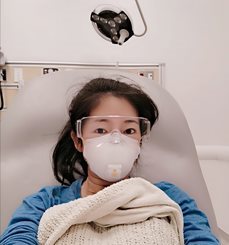
As Grace Cheung sat in her living room, nauseous and lightheaded, she felt helpless and called her friend to help her. With a family history of cerebral hemorrhages, she was nervous.

Grace had been self-isolating and had been unable to continue her regular routine of running up to 12KM, 5 days a week.

She decided to do some an aerobic workout, while she transitioned back to her normal running routine, but felt lightheaded when she completed her exercise.  Thinking it was just the new exercise, she sat down and the dizziness and nausea started. Eventually, she couldn’t stand or control her body at all. That’s when she called her friend, Michael.

“Michael, help. I’m dying.”

Both called 911, although Grace was unable to hear or understand the operator.

When the ambulance arrived, the paramedics administered a drug to ease her nausea, and transported her to Joseph Brant Hospital for assessment.

Despite the situation with COVID-19, Grace was immediately struck with how organized the Emergency Department was. She had been discussing the lack of PPE in some Hospitals with friends a few days before, but was struck by the calm demeanour and professional service she received from the staff.

But the care and attention she received in the Emergency Department reassured her that our system is working and that she was in good hands at JBH.

Our system is still working she thought, as they conducted a number of tests to determine the issue. Grace was referred to a specialist for follow-up and discharged the same day.

George Stroe

When George Stroe first visited the Emergency Department at Joseph Brant Hospital in late March, he had no idea the journey he was about to go on.

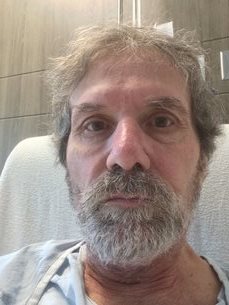
George had been experiencing symptoms consistent with COVID-19 including a fever, worsening cough and difficulty breathing. Following the proper protocols, he was isolated, tested and admitted to the hospital for further care.

Within the first day, his condition worsened to the point where he required admission to the ICU, and the following day had a breathing tube inserted and was placed on a ventilator.

“The reality is that I deteriorated very fast, in a matter of hours,” he says. “I would have died for sure if it wasn’t for the hospital with doctors around me who did all they could to save me.”

When he woke up, he was unsure of where he was and George says he remembered his birthday, and that he was admitted in March but he “had no idea was it April, was it May, was it June?”

And two weeks ago, George, who was the first COVID-19 positive patient in the Hospital, the first to be admitted to the ICU, the first to be placed on a ventilator was the first to be discharged from the ICU.

Just over a week later, George was discharged from the hospital and still has no memory of his time in the ICU other than having high praise for the staff.

“Everyone took very good care of me,” he said.

After spending a month in hospital, George is relearning how to do certain things. While he can do most things unaided, he is relearning to write and to type.

“When I looked at my signature on my discharge papers I noticed how poor my handwriting looked,” said George. “But first and foremost, I’m happy to be alive. It’s a hell of a disease and I’m forever grateful.”