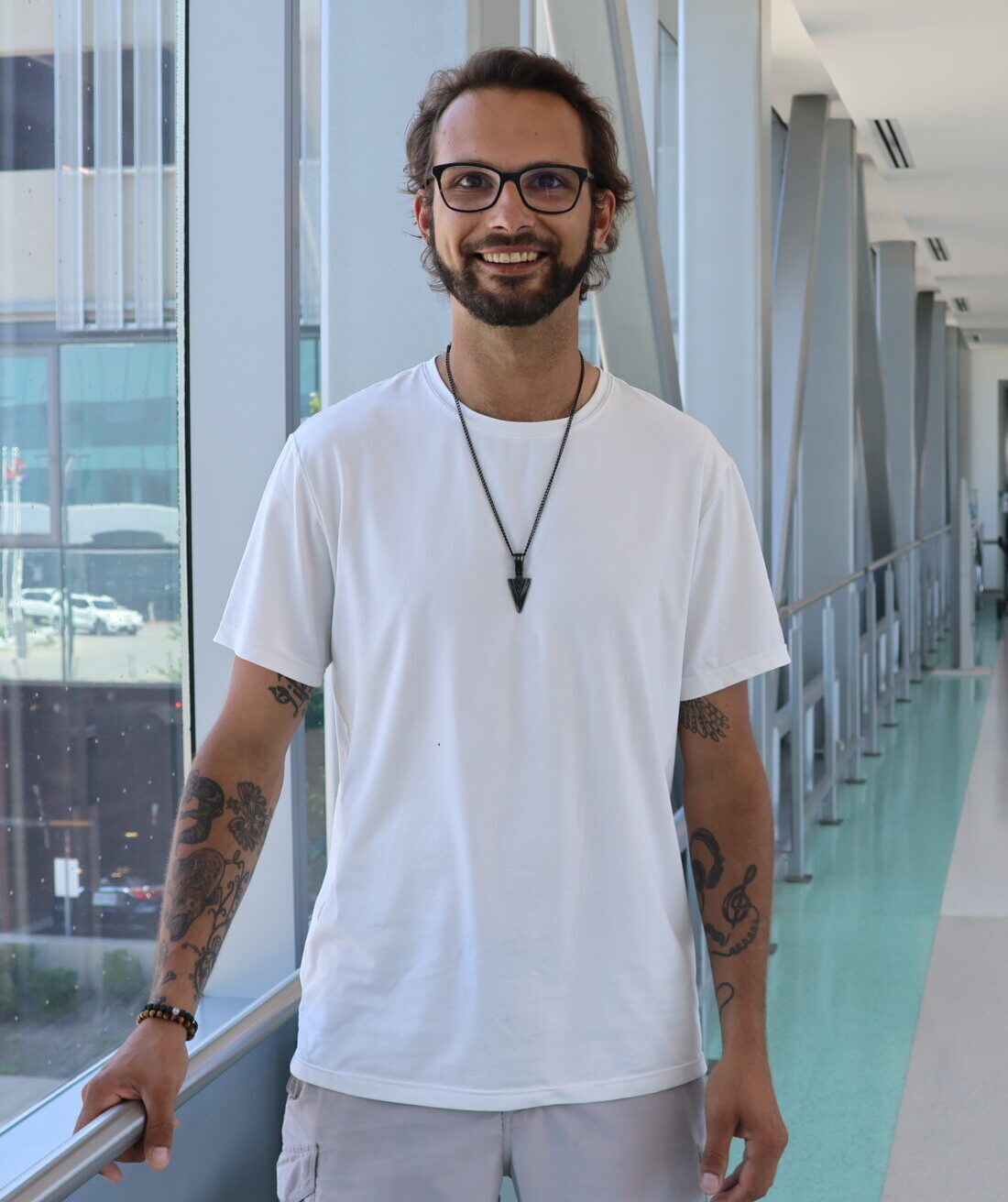
Jan never imagined that a deeply personal journey through mental illness would lead him down an entrepreneurial path. Diagnosed with bipolar disorder in his early twenties, Jan spent years trying to understand what was happening in his mind — mistaking long periods of depression and bursts of energy as “normal,” even as those patterns slowly took a toll on his life and relationships.
“I had my first full psychotic episode in my mid-20s,” Jan recalls. “I couldn’t be around people. I didn’t feel safe. I thought people were following me.”
After a frightening episode, his father — a surgeon at Joseph Brant Hospital — helped him access care. Jan was admitted to the hospital and later received inpatient treatment at an intervention clinic. Those weeks, spent under close observation, were difficult.
“Being held against your will is terrifying,” he says. “I didn’t trust anyone. But slowly, things started to stabilize.”
It wasn’t a quick fix. It took months of trial-and-error with medications, and years of rebuilding the confidence and mental strength that psychosis had eroded. But eventually, with support from peers who had lived through similar experiences, and a treatment plan that worked for his body, Jan began to feel like himself again.
He opened GoFloat in 2018 — a float therapy studio that aims to help people reduce anxiety and reconnect with themselves through deep sensory rest. While the launch came at a time when he was still struggling, the business became part of his healing.
“At first, I didn’t even feel proud. I couldn’t enjoy the success,” he says. “But I kept going. And eventually, things started to lift.”
Today, Jan manages his mental health with regular therapy, consistent medication, and maintenance practices like yoga, playing competitive pool, fishing, and — of course — floating.
“Floating helps quiet your mind. When everything else is turned off, your body can finally let go,” he says. “It’s one small improvement that can contribute to your overall well-being.”
Jan has decided to give back to his community by supporting the Joseph Brant Hospital Foundation.
“Even though I wasn’t treated at JBH specifically, my father works there. I know how important mental health resources are — and how deeply they affect people and their families,” he explains. “Supporting the hospital means supporting real improvements for people in Burlington going through the same things I did.”
To Jan, giving back is about more than gratitude — it’s about creating access. “
We have the technology, the knowledge, and the resources now. We just have to make sure the right people can get to them. And that takes community support.”
Jan hopes his story will remind others that healing is possible — and that the more we talk about mental health, the more likely we are to make space for recovery.